
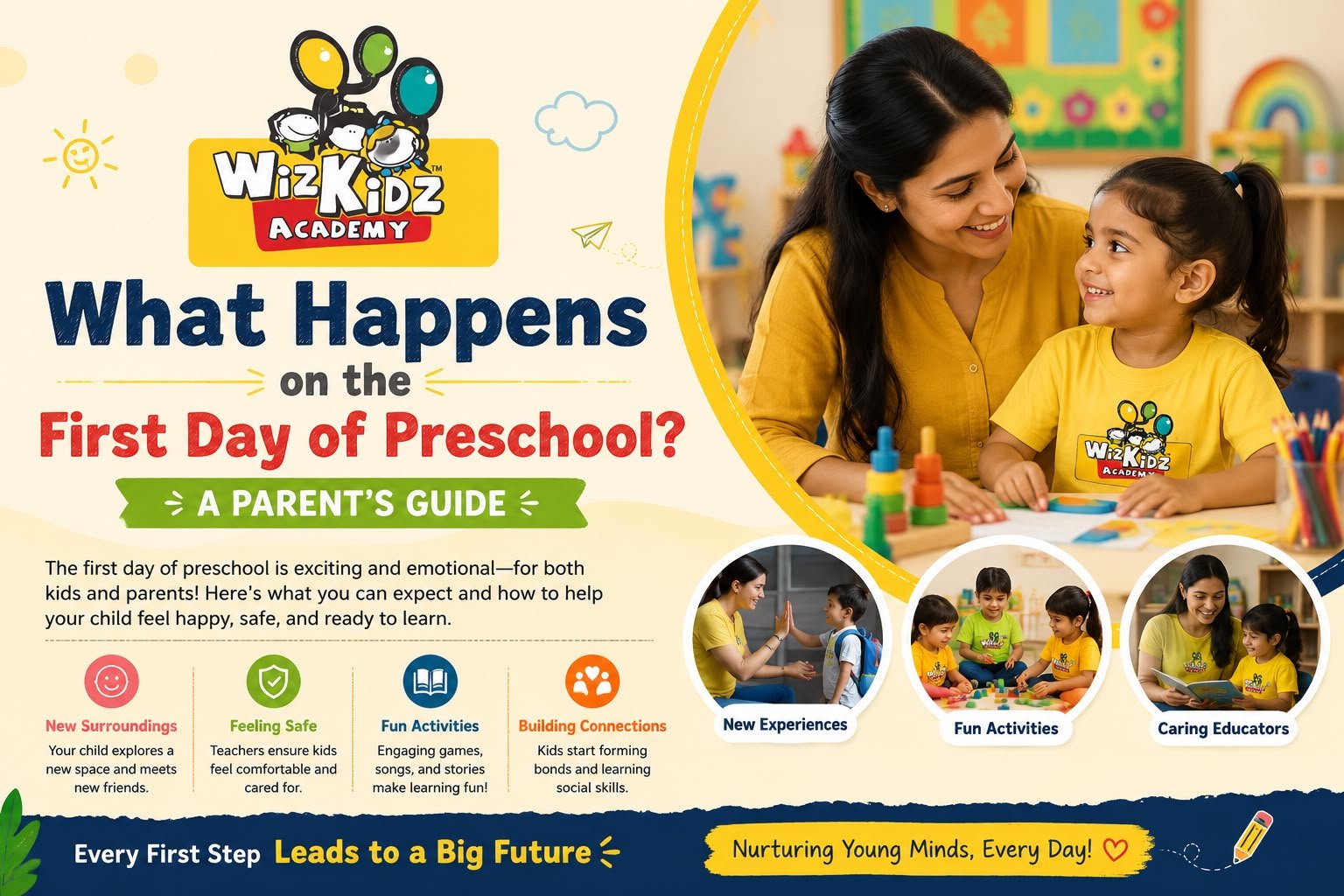
The first day of attending preschool becomes an important step in the lives of not only kids but also parents who worry about their little one’s behavior at school. The first day of preschool is exciting and interesting. It is usually accompanied by some curiosity and possibly some tears. At the same time, preschool might become a child’s first experience of spending several hours away from home and communicating with educators and other kids.
Parents are always concerned: what will happen during the first day of preschool; how the child will behave and what he or she will do there; will the child cry and so on. Knowing what to expect will make this process easier and more pleasant for everyone.
Though all preschools have their own schedule of activities, the first day always includes getting to know each other, creating feeling of safety and comfort in the child, introducing to the class and its activities.
This guide will answer all your questions about the first day of preschool and provide useful advice.
What Happens on the First Day of Preschool?
The first day is more about adapting to the preschool environment, building relationships, getting used to the classroom, and meeting new people.
Children might engage in some easy activities like playing with toys, hearing tales, drawing, singing songs, or exploring various learning areas. Teachers will mostly concentrate on creating a comfortable environment instead of expecting children to comply with all of the rules at once.
Arrival and Welcome
The usual beginning of the first day will be the time when children arrive with their parents to the preschool. The teachers will try to greet each child by name and introduce them to the classroom.
While some children will bravely walk into the room, others might feel shy and cling to their parents. In either case, these actions are quite normal.
The teachers have the experience of making children adapt to the classroom environment. They can draw the child’s attention to a toy, an activity, a book, or another kid to make the separation process smoother.
Meeting the Teacher
The acquaintance with the teacher is one of the main purposes of the first day of children’s attendance.
The teacher can introduce herself/himself to the child and show where they should leave their belongings and how to proceed with simple classroom procedures.
Classroom Exploration
Children are sometimes encouraged to explore the new setting.
Some of the things children can find include:
Books and Reading corners
Blocks and puzzles
Art and Craft materials
Toys and Pretend-play corners
Musical activities
Outside play areas
Furniture
Storage places
Exploration allows children to become familiar with the classroom.
Will My Child Cry on the First Day of Preschool?
Many parents worry about crying on the first day. The truth is that crying is a normal response to separation and a new environment.
Some children cry for a few minutes when their parents leave, while others may remain upset for longer. Some children do not cry at all.
Why Do Children Cry?
There are a number of reasons why a child can cry:
They are not accustomed to the environment.
They miss their parents.
They are making new friends.
They don’t know how long they have to stay away from home.
They are bombarded with too much sound and activity around them.
They are suffering from separation anxiety.
Crying doesn’t automatically mean that your child doesn’t like preschool.
How Teachers Support
Preschool teachers generally comfort the child by offering him assurance and involving him in some activities.
For example, the teacher can say, “Let’s read the book,” or ask the child to play with blocks or get involved in any group activity. As children get distracted and begin to take interest in their environment, their anxiety reduces.
It is important for parents to understand that adjustment takes time. While some children adjust themselves in a day or two, some require weeks.
What Activities Do Children Do on the First Day?
Preschool’s first day always consists of easy, fun activities to assist children with acclimatizing.
Free Play
Free play is when children have an opportunity to engage in activities that they choose. This is also a chance for teachers to watch the personality traits, interests, language skills, and behavior of kids.
Story Time
Teachers can either read children a short picture book or tell them a little story. This activity makes kids more comfortable with the classroom environment and helps develop language skills.
Songs and Rhymes
Teachers can sing songs, rhymes with actions or movement activities to make children comfortable and actively participate.
Drawing or Painting
Children can draw, color, paint or take part in any other artistic activities. This way, they will have an opportunity to express their creativity and improve their motor skills.
Outdoor Play
If the preschool has some outdoor facilities, then children can spend some time playing outdoors.
What Will My Child Learn on the First Day?
It’s not always about accomplishing academic sheets or grasping many ideas on the first day.
Children start learning basic skills from their daily experience.
The things they can learn include:
Where to keep their personal things
Following simple directions
Working with other students
Asking their teacher for help
Participating in group activities
Sharing and taking turns
Locating various classroom supplies
Basic classroom procedures
Through these experiences, children slowly develop independence and confidence as learners.
What Does a Typical First Day Schedule Look Like?
Every preschool follows a different schedule, but a typical first day may look something like this:
1. Arrival and Greeting
The children will arrive, meet their teacher, and get settled in the classroom.
2. Free Play
The children will explore different toys, books, puzzles, and other classroom materials.
3. Circle Time
The teacher will possibly get the children together for some greetings, songs, introduction or maybe a story.
4. Activity Time
The children will do an appropriate activity like drawing or coloring depending on their age.
5. Snack Time
The children will have a snack where they will be taught how to wash their hands and sit down at the table.
6 .Outdoor/Movement Play
The children will do some outdoor play or dancing or any other form of physical activity.
7. Story/Quiet Time
The teacher will do a story or a relaxing activity for the kids.
8. Departure
The parents will come to collect their children from school and the teachers will brief them about their day.
The above schedule is just an example and will vary from one school to another.
How Can Parents Prepare Their Child for the First Day of Preschool?
It can go a long way to ease the process.
Talk Positively About Preschool
Discuss preschool in a positive yet realistic manner. You can tell your child that he will meet teachers, make new friends, and do many exciting things.
Do not make any unrealistic assurances like, “You will never cry.”
Instead, assure your child that it is okay to be scared but you will come back from preschool.
Practice Preschool Routines
Before the first day of preschool, practice some routines at home.
For instance, have your child:
Wake up at the same time each day
Dress up on his own
Have breakfast
Pack his bag
Use the restroom independently, if possible
Wash his hands
Put away his stuff
Routines are always good to build confidence in children.
Visit the Preschool Beforehand
Whenever possible, take your kid to the preschool before their first day. Show them the classroom, the playground, the teachers, and all other facilities.
The familiarity of the surroundings will make them feel less scared on the day they actually come to the preschool.
Short Separations
For those kids who are used to not being away from their parents, try short separations with another trusted person of the family.
What Should Parents Pack for the First Day?
What Should Parents Pack for the First Day?
There is generally going to be a checklist of the required stuff that you have to pack for the school. In some cases, the following might go in your child’s backpack:
Water bottle
Healthy snack or lunch
Extra clothing
Tissues/wipes
Diapers, if needed
Small towel
School necessities
Comfort toy, if allowed
Label everything with your child’s name to avoid losing anything.
What Should Parents Do During Drop-Off?
The farewell can be among the most emotionally charged experiences for the first day.
Keep the Farewell Brief and Positive
Sometimes a lengthy farewell makes the parting process harder for the kids. Hug your child, give reassurances, and then confidently say goodbye.
Such as:
“Enjoy the school today. I will come and pick you up from school.”
Then leave.
Do Not Just Leave
While leaving secretly may seem like an easy option, it will make children less secure. The child will feel less confident next time when separated from his/her parents.
Clear farewell builds confidence.
Stay Calm.
Sometimes children understand emotions of the parents. If you look very worried about your child, then he/she will feel more anxious.
Try to stay calm despite the situation.
What If My Child Refuses to Go to Preschool?
A child may refuse going to preschool for a couple of days.
This does not mean that there is something wrong. Sometimes, it takes some time for a child to adjust to a new schedule.
Listen to Your Child
Ask easy questions regarding how he/she spent the day. Instead of constantly asking “Did you cry?”, ask:
“What did you play with today?”
“Who did you meet?”
“What was the most fun thing?”
“What book did your teacher read to you?”
It will make a preschool talk interesting.
Maintain Consistency
In case the preschool turns out to be right for your child and you have nothing serious to worry about, a routine will prove helpful.
Constant changes in your plans because of temporary refusal might only complicate your child’s adaptation to a new schedule.
If your child’s feelings remain strong for too long, it will be reasonable to talk to his teacher at the preschool.
How Long Does It Take for a Child to Adjust to Preschool?
There is no specified period for adjustment.
Some children adjust themselves within a few days; however, some need weeks. This adjustment may vary depending on the child’s personality, past experiences, age, temperaments, and experience of group settings.
It is advisable not to compare adjustment of one child with another.
It is not important to have an ideal first day. It is important to gradually build confidence in the child.
Simple Tips to Make Your Child’s First Day at Preschool Easier
Here are some simple tips that can be followed by parents:
1. Prepare your child a few days prior to the beginning of preschool.
2. Set up morning routines.
3. Prepare school essentials the night before.
4. Ensure your child gets enough sleep.
5. Offer healthy food to your child.
6. Reach on time.
7. Bid goodbye briefly and positively.
8. Place faith in the teacher and preschool team.
9. Do not compare your child’s reactions with other children’s.
10. Celebrate success.
Most importantly, patience is essential because starting preschool is a big transition for kids.
Frequently Asked Questions About the First Day of Preschool
1. What normally happens on the first day of preschool?
On the first day, there will be introduction to the teacher, exploration of the classroom, playtime using toys, simple activities, reading of stories and learning of classroom procedures.
2. Is it okay if a child cries on his first day in preschool?
Yes. It is normal because crying results from separation anxiety of the child or nervousness. With time and with proper support, most children become accustomed to their new surroundings.
3. Is it okay if the parent stays in the preschool during the first day?
It depends on the policy of the preschool. Some preschools give a period of orientation while others ask the parents to leave the preschool after saying goodbye.
4. How can I prepare my child for the first day in preschool?
Some of the ways in which you can do this include having routine activities, visiting the preschool, practicing separations, talking about the school positively and having age appropriate independence.
5. How long does it take a child to get used to the preschool?
The time taken is different with each individual. While some children adapt very fast, it may take other children weeks before adapting to the new environment.
<script type="application/ld+json">
{
  "@context": "https://schema.org",
  "@type": "FAQPage",
  "mainEntity": [{
    "@type": "Question",
    "name": "1. What normally happens on the first day of preschool?",
    "acceptedAnswer": {
      "@type": "Answer",
      "text": "On the first day, there will be introduction to the teacher, exploration of the classroom, playtime using toys, simple activities, reading of stories and learning of classroom procedures."
    }
  },{
    "@type": "Question",
    "name": "2. Is it okay if a child cries on his first day in preschool?",
    "acceptedAnswer": {
      "@type": "Answer",
      "text": "Yes. It is normal because crying results from separation anxiety of the child or nervousness. With time and with proper support, most children become accustomed to their new surroundings."
    }
  },{
    "@type": "Question",
    "name": "3. Is it okay if the parent stays in the preschool during the first day?",
    "acceptedAnswer": {
      "@type": "Answer",
      "text": "It depends on the policy of the preschool. Some preschools give a period of orientation while others ask the parents to leave the preschool after saying goodbye."
    }
  },{
    "@type": "Question",
    "name": "4. How can I prepare my child for the first day in preschool?",
    "acceptedAnswer": {
      "@type": "Answer",
      "text": "Some of the ways in which you can do this include having routine activities, visiting the preschool, practicing separations, talking about the school positively and having age appropriate independence."
    }
  },{
    "@type": "Question",
    "name": "5. How long does it take a child to get used to the preschool?",
    "acceptedAnswer": {
      "@type": "Answer",
      "text": "The time taken is different with each individual. While some children adapt very fast, it may take other children weeks before adapting to the new environment."
    }
  }]
}
</script>
Final Thoughts
Preschool’s opening day represents an essential milestone in your child’s educational development. It will be marked by a combination of such emotions as excitement, curiosity, making new friends, exploration, and even some tears.
Parents should know that the first day doesn’t have to be flawless. What really counts is to assist children in adapting and feeling safe and secure in the new surroundings.
Thanks to well-trained preschool teachers, an established routine, and support of parents, children will have all chances to build confidence and independence needed for the preschool experience.
In other words, if you want to know about the opening day of preschool, be ready for the day full of activities which are not focused on academic education, but rather on building relationships, exploration, play, and the process of adaptation.