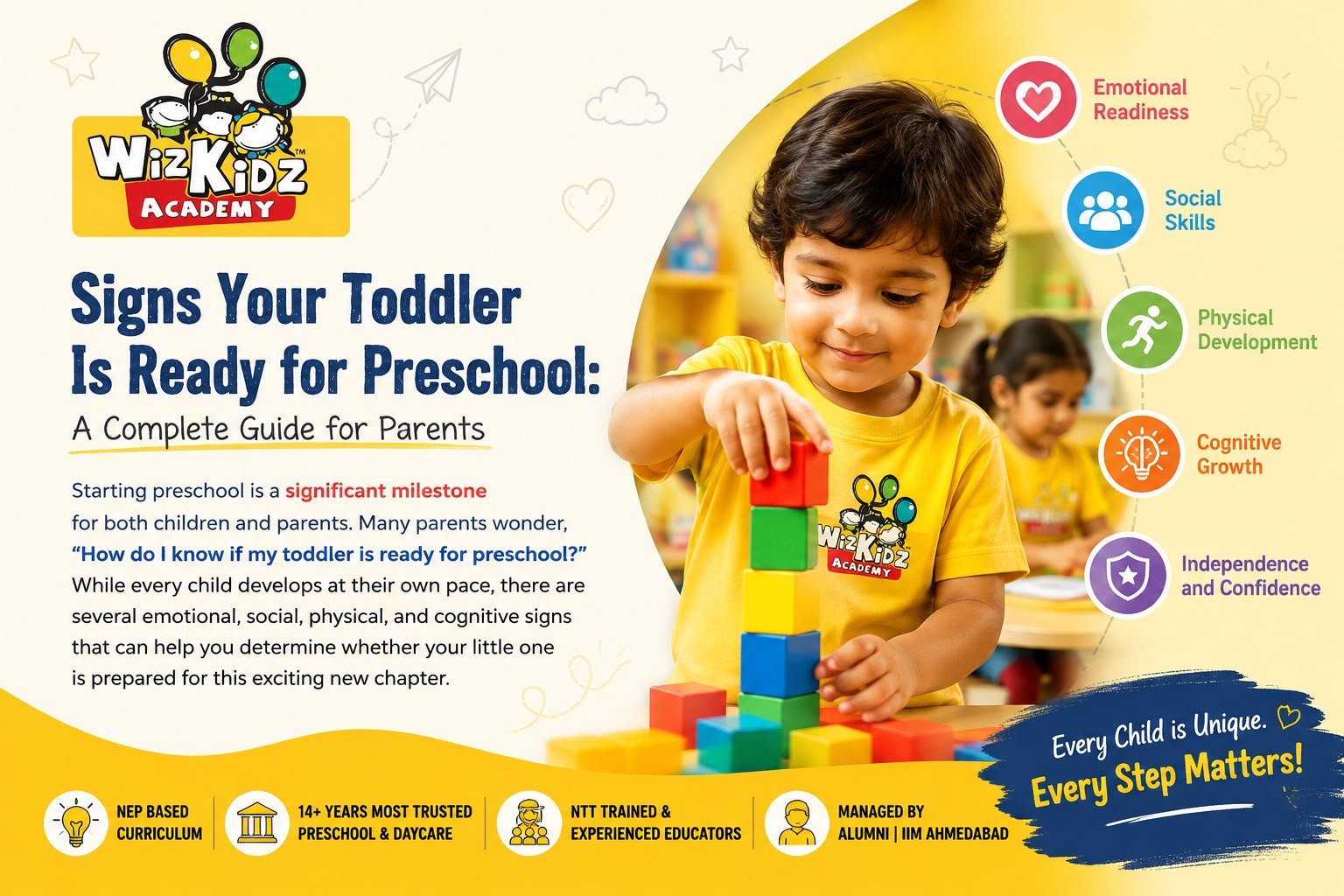
Enrolling your child in preschool is an important step not only for him but for you as well. Many parents find themselves asking: “When will I know my toddler is ready for preschool?” Though there are no strict age-related criteria, certain signs indicating readiness for school may be emotional, social, physical, and cognitive in nature.
Attending preschool enables a child to become independent, socialize with peers, develop communication skills, and get prepared for education in a structured environment. Nevertheless, sending your child to the appropriate preschool program will make his life easier.
This article will help you learn the most common signs your child is ready for preschool, tips on preparing for preschool, and answers to parents’ frequently asked questions.
Why Preschool Readiness Matters
Preschool goes beyond teaching the basics of letters and numbers. It is where kids learn vital life skills like sharing, listening, solving problems, regulating emotions, and collaboration.
When kids enter preschool at the appropriate point in their development, they will be more capable of:
Enjoying their learning activities
Gaining confidence
Adjusting to the new routine
Creating healthy relationships with friends
Becoming independent
Succeeding in entering kindergarten
What matters is not age but development.
What Is the Ideal Age for Preschool?
Most preschools have children of the ages 2.5-4, even though different schools have different age prerequisites.
However, being at the right age is not everything. Some children are psychologically ready at the age of 2.5, and some might need additional time and become ready closer to 3.5 years.
Rather than asking:
“Is my child old enough?”
Ask:
“Is my child ready developmentally?”
10 Signs Your Toddler Is Ready for Preschool
1. They can stay separated from parents for a limited time period
Separation from parents is one of the most significant indicators of preschool readiness.
They may:
Stay with grandparents
Have playdates
Play with relatives
Attend the daycare
It is common for toddlers to cry when leaving parents, but they should calm down quickly after being dropped off.
2. They Follow Simple Instructions
The preschool includes different routines and activities done in a group.
Your toddler should be able to follow such instructions as:
Sit down
Wash your hands
Put toys away
Form line
Come here
Instructions will help them take part in classroom activities properly.
3. They Are Interested in Other Children
Is your toddler smiling at other kids?
Does he/she like playing with them?
Although the toddler might not be able to engage in cooperative play, it is still good if he/she is interested in other kids.
Your child may:
Observe other kids
Share toys sometimes
Participate in group games
Copy other children while playing
Such social skills are necessary for classroom activities.
4. They Can Express Basic Needs
Toddlers don’t have to be able to speak perfectly.
But they must be able to say that:
I’m hungry.
I want to use the toilet.
I’m thirsty.
I’m injured.
I need help.
Expressing their needs makes teachers respond quickly and helps kids feel more confident.
5. They Can Adapt to Simple Routines
Preschool classes are conducted according to strict schedule.
So, children ready for preschool should be able to cope with such routines as:
Snack time
Circle time
Outdoor activity
Storytime
Nap time
Cleanup time
If your child is used to regular schedule at home, it will be easier for him/her to go to preschool.
6. They Show Interest in Learning
Curiosity is one of the best indicators of readiness to attend preschool.
They may:
Ask a lot of questions
Like reading books
Be fond of puzzles
Study colors
Count things
Sing songs
Recognize animals
Curious kids are likely to enjoy preschool activities.
7. They Can Focus for Short Periods
Toddlers’ attention spans are relatively short, but they should be able to engage in one activity for about 5–10 minutes.
Examples are:
Listening to a fairy tale
Painting
Playing with blocks
Doing puzzles
Performing action songs
Such attention span allows them to participate in classroom lessons.
8. They Are Becoming More Independent
Preschool requires kids to be independent.
Indicators of independence are:
Hand washing
Drinking from a cup
Putting things away
Learning to dress on their own
Feeding on their own
Kids do not need to be able to do everything independently, but the fact that they try is a good indicator.
9. They Like to Explore New Places
Do you child like exploring new environments?
If it is a park, a library, or a family event, toddlers who adapt to new surroundings tend to adapt to preschool easier.
Curiosity usually beats fear.
10. They Can Express Their Feelings
Managing emotions is a big part of preschool.
The toddler ready for preschool can:
Tell you he is sad
Ask you to comfort him
Recover from disappointment
Recognize emotions
Signs Your Child May Need More Time
Not all children develop at the same rate.
If you have a toddler that:
Is extremely anxious when separated from you
Has trouble communicating their basic needs
Is overwhelmed in groups
Has trouble following instructions
Finds it hard to adapt to changes
Then perhaps you should wait another couple of months.
How to Prepare Your Toddler for Preschool
Even if you feel that your child is ready, preparation will increase confidence.
Establish a Routine Schedule
Establish fixed schedules for:
Waking up
Eating meals
Playing
Reading stories
Going to bed
Routines will make schedules of preschool familiar.
Foster Independence
Teach your child:
To put on their own shoes
To carry a bag
To wash their hands
To clean toys after playing
To eat alone
Achieving small things will increase confidence.
Read Books About Preschool
Stories about attending a preschool will help your child to get an idea about how everything will be.
Reading stories will also give them the opportunity to talk about their feelings.
Make Play Dates
Playing with others will help to develop such skills as:
Sharing
Taking turns
Communicating
Cooperating
This will help with adjusting to class.
Attend the Preschool Before the First Day
If possible, it will be good to:
Meet teachers
Explore classrooms
Visit the playground
See learning material
It will help with reducing anxiety.
Benefits of Starting Preschool When Your Child Is Ready
Children who start preschool at an appropriate level of development generally have the following benefits:
Increased self-confidence
Improved ability to communicate
Strong friendships
Improved ability to regulate emotions
Creativity
Listening skills
Literacy
Problem-solving skills
Easier transition to kindergarten
Lifelong love for learning
Common Mistakes Parents Should Avoid
Comparison to Other Children
All children develop at their own pace. Preparedness is not about racing.
Fostering Independence Prematurely
It is better to let your child progress without pressure.
Overlooking Emotional Preparedness
While academic preparedness is great, emotional and social preparedness matter too.
Missing Orientation
Orientation to your preschool is very helpful on that first day.
Final Thoughts
Selecting the perfect time when your toddler should be enrolled in preschool is one of those things that go beyond the question of how old your child is. It is not just about waiting for certain signs, but being aware of when your child is emotionally, socially, physically, and mentally ready for the new adventure.
In case your child is capable of understanding and following instructions, telling their needs to you, asking questions, interacting with others, and following routines, your child is ready to attend preschool. The fact is that children develop at different rates, and thus there is no perfect age for starting preschool.
With your support, your toddler will be able to feel excited about attending the preschool.
Frequently Asked Questions (FAQs)
1. How do I determine whether my toddler is emotionally ready for preschool?
A child that can detach from his/her parents without excessive anxiety, exhibit emotional behavior and acclimate to a new schedule is typically emotionally ready.
2. At what age does my child need to start preschool?
Toddlers usually start preschool at the age of 2.5 to 4 years.
3. Do I have to ensure that my child is toilet trained before he/she starts going to preschool?
Each preschool may differ in terms of its requirements. Some preschools require toilet-trained kids, others help children to train.
4. What should I do if my child cries every morning?
It is normal behavior. Usually, consistency and reassurance work with such children.
5. Is preschool attendance obligatory for all children?
No, it is not. However, attending preschool provides children with numerous skills.
<script type="application/ld+json">
{
  "@context": "https://schema.org",
  "@type": "FAQPage",
  "mainEntity": [{
    "@type": "Question",
    "name": "1. How do I determine whether my toddler is emotionally ready for preschool?",
    "acceptedAnswer": {
      "@type": "Answer",
      "text": "A child that can detach from his/her parents without excessive anxiety, exhibit emotional behavior and acclimate to a new schedule is typically emotionally ready."
    }
  },{
    "@type": "Question",
    "name": "2. At what age does my child need to start preschool?",
    "acceptedAnswer": {
      "@type": "Answer",
      "text": "Toddlers usually start preschool at the age of 2.5 to 4 years."
    }
  },{
    "@type": "Question",
    "name": "3. Do I have to ensure that my child is toilet trained before he/she starts going to preschool?",
    "acceptedAnswer": {
      "@type": "Answer",
      "text": "Each preschool may differ in terms of its requirements. Some preschools require toilet-trained kids, others help children to train."
    }
  },{
    "@type": "Question",
    "name": "4. What should I do if my child cries every morning?",
    "acceptedAnswer": {
      "@type": "Answer",
      "text": "It is normal behavior. Usually, consistency and reassurance work with such children."
    }
  },{
    "@type": "Question",
    "name": "5. Is preschool attendance obligatory for all children?",
    "acceptedAnswer": {
      "@type": "Answer",
      "text": "No, it is not. However, attending preschool provides children with numerous skills."
    }
  }]
}
</script>
Proudly powered by Wizkidz Academy.