Are Preschool and Daycare the Same?
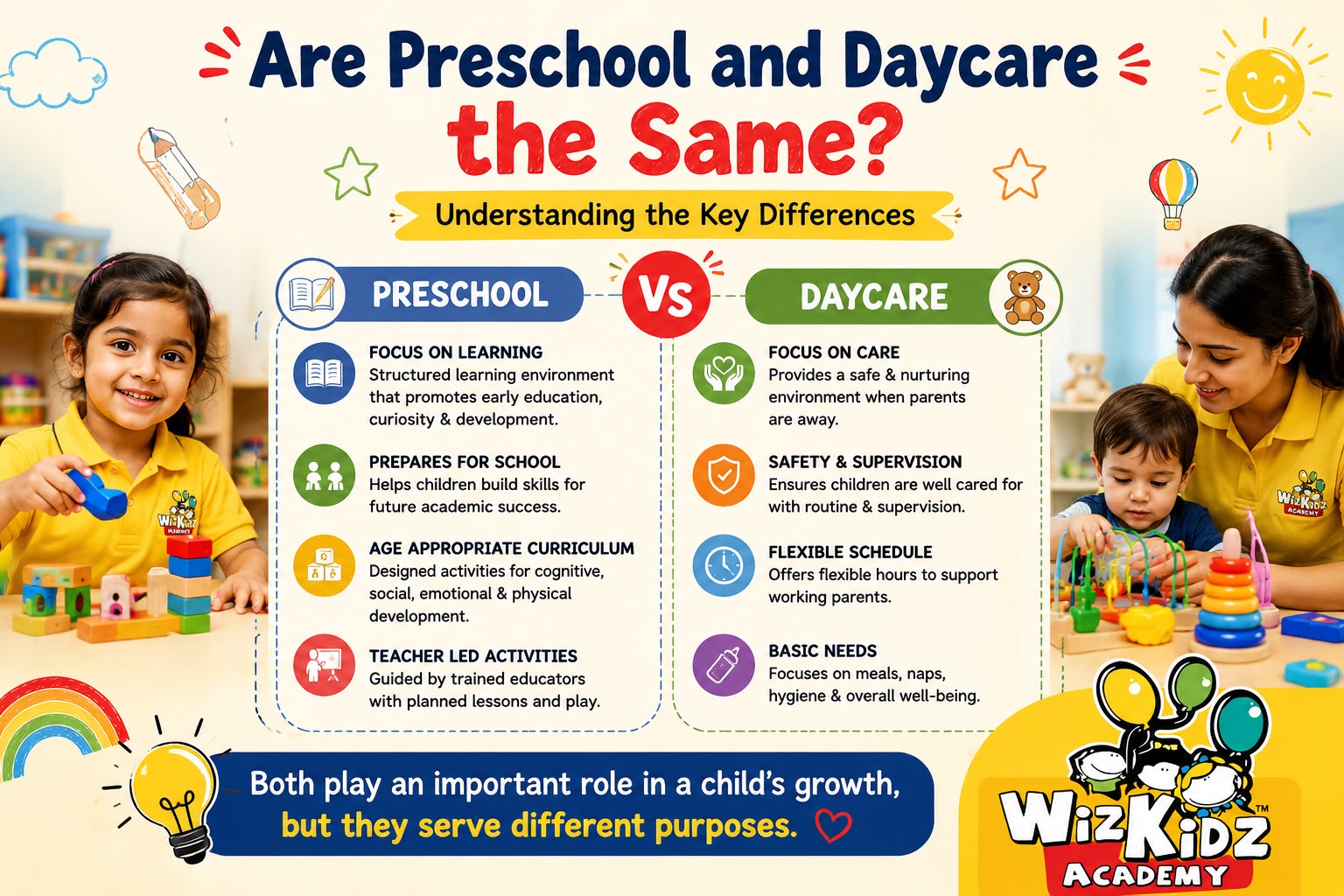
The majority of parents treat these two terms – preschool and daycare – as synonyms, believing that both denote the same type of services offered to children. Although both institutions provide a safe place for toddlers, their main objectives are different.
Are you a parent trying to choose between a preschool and a daycare? If you want to understand the main distinctions of these institutions and figure out what each one is good at, you will find the answers to these questions in this guide.
What Is a Preschool?
Preschool is an educational institution where young children are introduced to early childhood education that prepares them for kindergarten and elementary education. Preschool aims at helping children acquire important skills in academics, socialization, emotion, and cognition through different kinds of learning experiences.
In most cases, preschool takes children who are between the ages of 2.5 to 5 years.
Features of Preschool Education
Daily timetable
Early Childhood Educators
Learning through playing
Preparation for schooling
Interaction and cooperation among learners
Creative learning through art, music, and storytelling
Part-time operations
Preschool should be fun but educationally sound.
What Is a Daycare?
A daycare center (also known as a childcare center) mostly offers supervision and care to children when their parents are working or busy with other things.
Daycare centers typically look after children ranging from infants to preschool age, and even older children after they return from school.
Features of a Daycare Center
Longer hours of operation
Flexible pickup and dropoff times
Care for infants, toddlers, and preschoolers
Food and sleep schedules
Outdoor and indoor play time
Some educational activities
Safe and nurturing environment
Learning activities may be part of modern daycare centers; however, they do not offer education as their main purpose.
Preschool vs Daycare: The Major Differences
| Feature | Preschool | Daycare |
|---|---|---|
| Primary Purpose | Early education | Childcare and supervision |
| Age Group | 2.5–5 years | Infants to school-age children |
| Learning Focus | High | Moderate |
| Daily Schedule | Structured | Flexible |
| Operating Hours | Part-time or half-day | Full-day |
| Curriculum | Educational curriculum | Play-based care with learning activities |
| Teachers | Early childhood educators | Caregivers and childcare professionals |
| School Readiness | Strong emphasis | Limited emphasis |
Understanding these differences helps parents choose based on their child’s developmental needs and family schedule.
Why Preschool Matters
Preschool offers children important learning experiences which help them become ready for formal schooling.
1. Basic Academic Skills
Learning includes:
Identifying letters of the alphabet
Phonics
Numerical counting
Identification of numbers
Shapes
Colors
Vocabulary development
2. Social Development
Children learn how to:
Share toys
Group activities
Communication skills
Classroom rules
Friendship skills
Conflict resolution skills
All these are important for future socialization skills.
3. Emotional Growth
Preschool helps children become:
Independent
Confident
Responsible
Patient
Expressive
The children also develop their emotional skills as well as adapting to new situations.
4. Improved Communication Skills
Conversations, story-telling, music, and classroom discussion greatly help to develop language.
The children become good listeners and effective speakers.
5. School Readiness
One of the major objectives of preschool is that of getting children ready for primary education.
Children become accustomed to:
Classroom activities
Taking instructions
Group sitting
Working on their own
Following time-tables
Benefits of Daycare
Daycare also plays an important role, especially for working families.
1. Convenient Childcare
A majority of day care centers are open from morning till night making them suitable for busy parents.
2. Safety
In licensed day care centers, the following safety measures exist:
Safe environment
Educated carers
Hygiene practices
Emergency plans
3. Early Socialization
Early socialization is necessary since even at a young age children can make new friends playing together.
4. Routines
Through attending day cares, children get accustomed to various routines which include:
Eating
Sleeping
Playing
Hygiene practices
5. Early Educational Activities
Today, most day care centers offer the following activities to kids:
Reading stories
Singing songs
Repetition of phrases
Crafts
Can a Daycare Also Be a Preschool?
Yes.
Many childcare centers are now providing a combination of daycare facilities along with preschool education facilities.
Such childcare centers provide:
Full-time child care facilities
Structured learning sessions
Qualified teachers
Play-based curriculum
Healthy food
Outdoor activities
This kind of facility is very helpful for parents having jobs.
Which Option Is Better for Your Child?
The answer depends on your family’s needs.
Choose Preschool If:
Your child is aged between 3 and 5.
You are getting ready for kinder garden.
You prefer structured learning environment.
Academic readiness is your main concern.
You can manage limited working hours.
Choose Daycare If:
You require full-day child care.
Your child is below preschool age.
You have full day job.
Flexibility in working hours is very important to you.
Factors to Consider Before Choosing
Every family is unique.
Here are some important factors to evaluate.
1. Your Child’s Age
Infants usually benefit more from daycare, while preschool-aged children often gain more from structured educational programs.
2. Learning Needs
If your child enjoys books, puzzles, and learning activities, preschool may provide greater developmental opportunities.
3. Family Schedule
Working parents often require daycare because of its extended operating hours.
4. Budget
The price will depend on:
Place
Quality of program
Qualification of teachers
Facilities
Length
Compare the value as a whole instead of just the price.
5. Curriculum
Ask about:
Daily lesson plan
Learning goals
Instructional approach
Creative activities
Playtime outside
A balanced curriculum promotes holistic development of children.
6. Teachers’ Qualification
Experienced teachers know about the psychology of children and offer better guidance during the initial stages of development.
7. Safety Standards
Always keep in mind:
Security measures
Cleanliness
Ratio of children to teachers
Emergency procedures
Health policies
Safety should always be a top priority.
Questions Parents Should Ask Before Enrolling
Before making a decision, ask the center:
What curriculum do you follow?
What are your operating hours?
What qualifications do your teachers have?
What is the teacher-to-child ratio?
How do you communicate with parents?
Are meals included?
How do you handle emergencies?
How do you support children’s emotional development?
The answers will help you determine whether the center aligns with your expectations.
Signs of a Good Preschool
Choose a preschool that has:
Certified teachers
Interactive classroom sessions
Age-appropriate curriculum
Safe facilities
Good teacher-child relationship
Effective parent communication
Activities both indoors and outdoors
An environment that nurtures ensures that children enjoy the process of learning.
Signs of a Quality Daycare
A reliable daycare should provide:
Clean and sanitary environment
Attentive and caring teachers
Safe equipment
Healthy food
Routine schedule
Lots of playtime
Effective communication with parents
Such attributes will keep children contented and healthy.
Common Myths About Preschool and Daycare
Myth 1: Preschool and day care are the same.
Truth: Preschool is concerned with learning, whereas day care is mainly concerned with childcare.
Myth 2: Day care does not do any teaching.
Truth: Numerous day care programs incorporate learning in their routine despite not having a curriculum.
Myth 3: Preschool only revolves around academics.
Truth: Preschool also promotes creativity, emotional intelligence, and physical well-being.
Myth 4: Kids only need day care until kindergarten age.
Truth: A good quality day care facility can help kids develop emotionally and socially even before school starts.
Final Thoughts
Therefore, can we conclude that preschools and daycare are one and the same? The easy and clear answer to this question is negative.
The reason for that is the fact that although they both offer nurturing surroundings for kids, their purposes are different. Thus, while preschools focus on education and prepare kids for school in terms of knowledge acquisition, daycare centers concentrate on safe and responsible caring for children along with their development and play.
The great news is that many contemporary centers for childcare do perfectly integrate the advantages of both of them into their facilities and offer educational programs along with 24-hour care.
Frequently Asked Questions (FAQs)
- Is preschool equal to daycare?
No, these institutions have different purposes. Preschool is an institution where children receive pre-school education and prepare for school, while daycare is an institution where childcare is provided.
- What is better for my child, preschool or daycare?
It all depends on how old your child is and what you are expecting from preschool or daycare. Preschool is great if you want your kid to learn something and get ready for kindergarten. Daycare is better for you in case you need to leave your kid somewhere in the daytime because of work.
- When is it time to enroll in preschool?
Children can start going to preschool between 2.5 and 4 years of age. It will depend on how ready your kid is and what requirements are set by the preschool institution.
- Does daycare provide some learning experience for children?
Yes. Most daycare centers today organize activities like storytelling, singing, painting, and other simple educational games for kids.
- Can a child attend daycare and preschool?
Yes. Some parents decide to combine both and send their children to preschool for education and to daycare before and after preschool time.
<script type="application/ld+json">
{
  "@context": "https://schema.org",
  "@type": "FAQPage",
  "mainEntity": [{
    "@type": "Question",
    "name": "Is preschool equal to daycare?",
    "acceptedAnswer": {
      "@type": "Answer",
      "text": "No, these institutions have different purposes. Preschool is an institution where children receive pre-school education and prepare for school, while daycare is an institution where childcare is provided."
    }
  },{
    "@type": "Question",
    "name": "What is better for my child, preschool or daycare?",
    "acceptedAnswer": {
      "@type": "Answer",
      "text": "It all depends on how old your child is and what you are expecting from preschool or daycare. Preschool is great if you want your kid to learn something and get ready for kindergarten. Daycare is better for you in case you need to leave your kid somewhere in the daytime because of work."
    }
  },{
    "@type": "Question",
    "name": "When is it time to enroll in preschool?",
    "acceptedAnswer": {
      "@type": "Answer",
      "text": "Children can start going to preschool between 2.5 and 4 years of age. It will depend on how ready your kid is and what requirements are set by the preschool institution."
    }
  },{
    "@type": "Question",
    "name": "Does daycare provide some learning experience for children?",
    "acceptedAnswer": {
      "@type": "Answer",
      "text": "Yes. Most daycare centers today organize activities like storytelling, singing, painting, and other simple educational games for kids."
    }
  },{
    "@type": "Question",
    "name": "Can a child attend daycare and preschool?",
    "acceptedAnswer": {
      "@type": "Answer",
      "text": "Yes. Some parents decide to combine both and send their children to preschool for education and to daycare before and after preschool time."
    }
  }]
}
</script>