
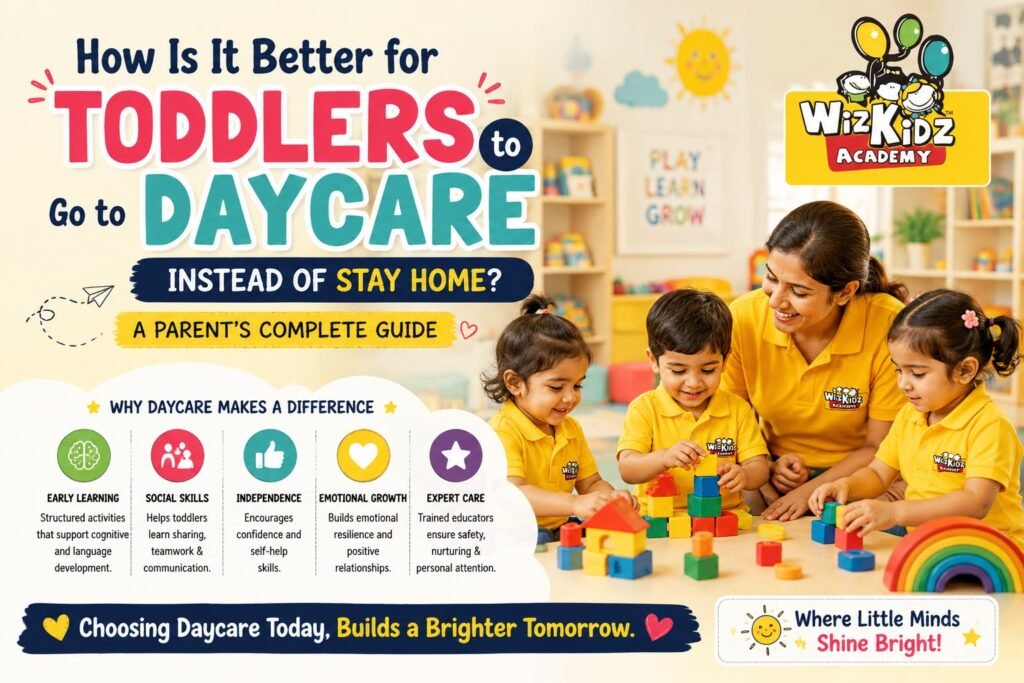
Introduction
One of the toughest dilemmas parents confront when bringing up kids is deciding on whether to leave the toddlers at home or send them to day care. While each situation is different, day care centers have a lot of developmental and educational advantages which will impact your kid in the future positively.
A lot of parents are concerned about the lack of family time when kids are being left at day care. Some of them think that toddlers are too small for any structured learning. But good day care centers offer a great environment for learning, making friends, and acquiring life skills.
In this article, we are going to talk about the ways daycare helps toddlers better than staying at home, scientific evidence about childhood education and how to choose the right daycare center.
Why Early Childhood Experiences Matter
In the initial five years of life, brain development in children is important. The period sees toddlers acquire information quickly through interaction, playing, talking, and exploring.
Good early experiences enable the development of:
Communication and language skills
Emotional intelligence
Social confidence
Problem-solving skills
Creativity
Motor skills
Independence
Although some of these skills could also be acquired through home-based care, daycare offers a well-organized system with trained professionals, socialization, and different learning opportunities.
What Is Daycare?
Daycare is a professional form of child care that is offered by organizations to infants and toddlers while their parents are away from home working or busy with other chores.
Daycare differs from babysitting in the sense that it includes all of the following elements for the benefit of children:
Learning through play
Socialization
Routine
Nutritious meals
Outings
Creative activities
Formal education
Emotional support
The objective here is not just child-minding but child development.
Benefits of Daycare for Toddlers
1. Better Social Skills
One of the best things about going to daycare is that they get to play with other kids every day.
Kids instinctively know how to do all of the following:
Share their toys
Take turns
Work as part of a team
Show respect for others
Develop friendships
Resolve small disagreements
Children who go to daycare on a regular basis usually interact with peers more than those who stay at home and spend time with adults only.
3. Improved Communication and Language Development
The daycare environment is full of talk.
The toddlers hear:
Stories
Songs
Rhymes
Directions
Discussions
Vocabulary
The caregivers teach the children how to express their feelings, ask questions, and share what they need.
Interaction with adults and other children helps the language develop.
3. Learning Through Structured Activities
Daycare centers ensure the scheduling of age-appropriate activities on a daily basis.
These include:
Arts and Crafts
Creativity is enhanced while developing hand-eye coordination.
Story Time
Books stimulate imagination and language development.
Music and Dance
Listening skills and rhythmic and motor development are stimulated.
Building Blocks
Problems solving and spatial awareness are taught through blocks.
Sensory Play
Sand, water, clay and textured substances engage imagination and brain development.
In contrast to unsupervised screen time at home, these are deliberately designed activities for learning purposes.
4. Encourages Independence
The toddlers learn how to perform these minor chores independently over time.
Some examples of these minor chores are:
Hand washing
Feeding themselves
Putting away toys
Wearing shoes
Carrying their things around
All these help the kids build confidence.
5. Builds Emotional Confidence
Spending time away from their parents in short spans of time will teach the toddlers to feel secure even when their family members are not around.
The experienced caregivers assist children in developing skills related to emotions such as:
Controlling emotions
Establishing trust
Handling frustrations
Expressing emotions
Becoming resilient
Such emotional skills are vital at all stages of one’s life.
6. Healthy Daily Routine
Routines are the best for kids.
Almost all childcare centers have a fixed routine, which is:
Arrival
Free Play
Activity Time
Snacks
Outdoor Play
Lunch
Rest Time
Art and Craft Time
Pickup
A routine is very important for toddlers because it makes them secure.
7. Physical Development
Daycare promotes physical activities on a daily basis.
These include activities such as:
Running
Climbing
Dancing
Jumping
Playing ball games
Obstacle courses
The above activities help develop:
Balance
Co-ordination
Strength
Fine motor skills
Gross motor skills
Kids who tend to remain indoors at home may miss out on physical activities.
8. Exposure to Diversity
Daycare introduces toddlers to children from different backgrounds, cultures, and family structures.
This exposure teaches:
Respect
Kindness
Inclusion
Empathy
Acceptance
These values help children grow into compassionate individuals.
9. Better Preparation for Preschool
Kids enrolled in daycare find it easier to adjust to preschool since they are already accustomed to:
Classroom activities
Group study
Attending to what the teacher is saying
Taking instructions
Socialization
Sharing of materials
10. Reduced Screen Time
Parents find it difficult to keep their children from using too much screen time at home.
Quality daycare centers emphasize the following:
Activities
Outdoors play
Reading
Games
Social learning
Staying Home Has Benefits Too
There are many benefits to attending daycare; however, staying at home has its merits as well.
The toddlers that will be staying at home have the following benefits:
Increased personal attention
A flexible routine
Strong family bonding
Comfortable environment
Personalized learning rate
Providing children with adequate engagement through reading, play dates, outdoor exercises, and various games, parents can ensure proper development of the toddler.
The decision can be based on the family lifestyle and work schedule.
Daycare vs Staying Home: A Comparison
| Feature | Daycare | Staying Home |
|---|---|---|
| Social interaction | Daily with peers | Limited unless arranged |
| Structured learning | Yes | Depends on parents |
| Daily routine | Consistent | Flexible |
| Independence | Encouraged daily | Varies |
| Physical activities | Planned every day | Depends on family routine |
| Professional guidance | Yes | Parent-led |
| School readiness | Strong | Varies based on activities |
How Parents Can Make Daycare Successful
A positive daycare experience starts with preparation.
Visit the Centre First
Observe:
Cleanliness
Safety measures
Staff behaviour
Learning materials
Outdoor play area
Start Gradually
Allow toddlers to adjust by beginning with shorter visits before moving to full-day attendance.
Maintain a Positive Attitude
Children notice their parents’ emotions.
Speak positively about daycare to build excitement and confidence.
Communicate with Caregivers
Regular communication helps parents stay informed about:
Meals
Activities
Behaviour
Developmental milestones
Strong partnerships between parents and caregivers benefit children.
Keep Home and Daycare Connected
Ask your toddler about their day, celebrate new skills, and reinforce learning through activities at home.
Quality Daycare Indicators
While selecting a daycare facility, you should check for:
Professional and loving staff
Healthy and sanitary surroundings
Low child-to-staff ratio
Developmentally appropriate learning aids
Nutritious meals and snacks
Proper security measures
Effective parent-teacher communication
Good recommendations and reputation
High-quality daycare facilities always ensure safety as well as overall child development.
Common Myths About Daycare
Myth 1: Learning Only Takes Place at Home
Fact: Both environments can help children succeed. Good daycare enhances learning through structure and socializing opportunities.
Myth 2: Attending Daycare Reduces Attachment of Children to Their Parents
Fact: A secure attachment requires loving and responsive parents. Daycare will not damage parent-child attachments.
Myth 3: Toddlers Are Too Young for Daycare
Fact: Toddlers are eager learners by nature. Age-appropriate daycare is designed to help them develop through play and exploration.
Frequently Asked Questions (FAQs)
1. Is daycare better than staying home for toddlers?
Daycare can offer advantages such as social interaction, structured learning, and school readiness. However, the best option depends on the child’s needs and family circumstances.
2. At what age should a toddler start daycare?
Many children begin daycare between 12 and 24 months, although the right age varies depending on family preferences and the child’s readiness.
3. Will daycare improve my child’s communication skills?
Yes. Regular conversations with caregivers and peers often help toddlers build vocabulary, listening skills, and confidence in expressing themselves.
4. Can toddlers become independent in daycare?
Absolutely. Daily routines encourage toddlers to complete simple tasks on their own, helping them develop confidence and responsibility.
5. How do I know if a daycare is right for my child?
Look for qualified staff, a clean and safe environment, engaging learning activities, positive communication with parents, and a warm, nurturing atmosphere.
Conclusion
It is an extremely personal choice whether to send toddlers to daycare or to keep them at home, but the latter choice comes with a variety of well-documented benefits for children in terms of socialization, self-reliance, education, and so forth. Daycare provides an excellent basis for successful future development and achievements.
For busy parents who need to go to work, it also means security because their kids will be looked after by professionals who will create a favorable atmosphere for learning while children are having fun playing and interacting with their peers.
Whereas home care can be equally good at fostering kids’ development, daycare creates special conditions for developing friendships and preparing toddlers for preschool and education in the future. In any case, the right choice should bring happiness to the child and his or her parents.
<script type="application/ld+json">
{
  "@context": "https://schema.org",
  "@type": "FAQPage",
  "mainEntity": [{
    "@type": "Question",
    "name": "Is daycare better than staying home for toddlers?",
    "acceptedAnswer": {
      "@type": "Answer",
      "text": "Daycare can offer advantages such as social interaction, structured learning, and school readiness. However, the best option depends on the child's needs and family circumstances."
    }
  },{
    "@type": "Question",
    "name": "At what age should a toddler start daycare?",
    "acceptedAnswer": {
      "@type": "Answer",
      "text": "Many children begin daycare between 12 and 24 months, although the right age varies depending on family preferences and the child's readiness."
    }
  },{
    "@type": "Question",
    "name": "Will daycare improve my child's communication skills?",
    "acceptedAnswer": {
      "@type": "Answer",
      "text": "Yes. Regular conversations with caregivers and peers often help toddlers build vocabulary, listening skills, and confidence in expressing themselves."
    }
  },{
    "@type": "Question",
    "name": "Can toddlers become independent in daycare?",
    "acceptedAnswer": {
      "@type": "Answer",
      "text": "Absolutely. Daily routines encourage toddlers to complete simple tasks on their own, helping them develop confidence and responsibility."
    }
  },{
    "@type": "Question",
    "name": "How do I know if a daycare is right for my child?",
    "acceptedAnswer": {
      "@type": "Answer",
      "text": "Look for qualified staff, a clean and safe environment, engaging learning activities, positive communication with parents, and a warm, nurturing atmosphere."
    }
  }]
}
</script>